October 22, 2026, Dubai, United Arab Emirates (UAE): Canadian University Dubai (CUD) took part in WETEX 2026, with a student and a faculty member contributing to discussions on the green economy, health and safety.
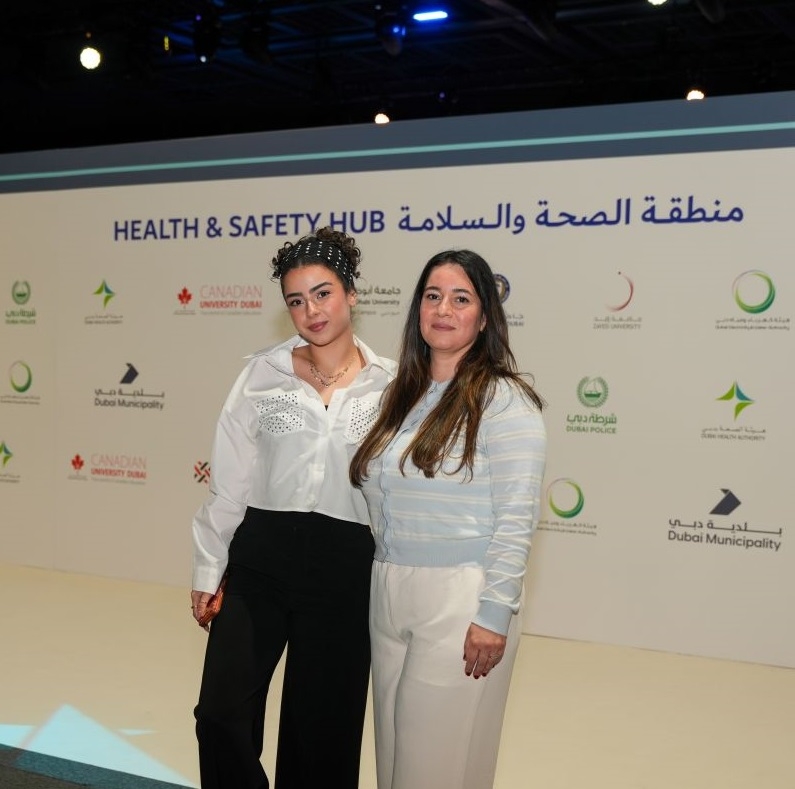
Hessa Suroor, a Bachelor of Science in Public Health and Environmental Health Management student, brought a youth perspective to the World Green Economy Summit’s Youth Roundtable, held on the sidelines of WETEX.
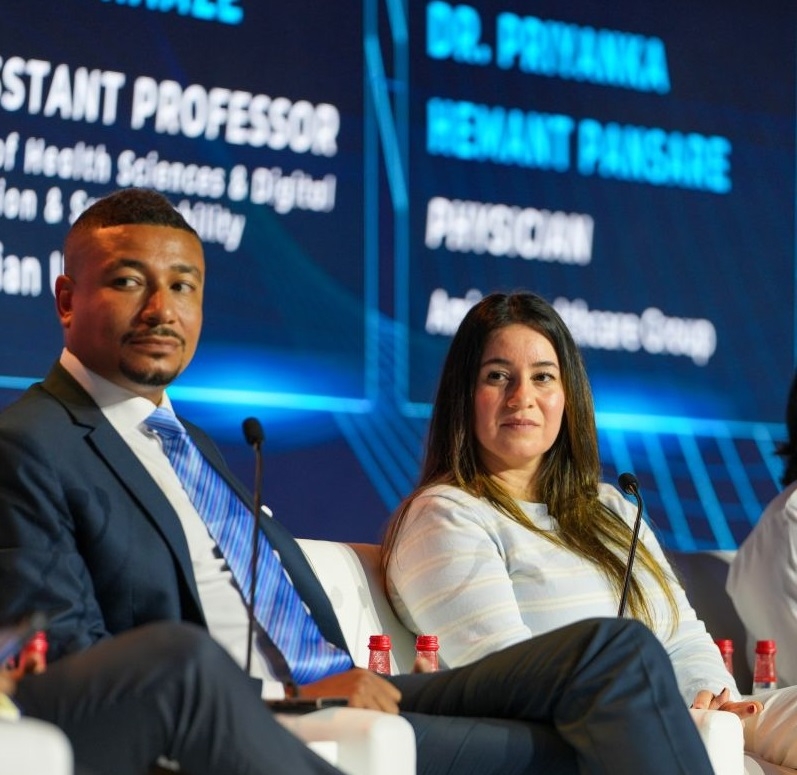
Dr. Abir Hamze, Assistant Professor in the School of Health Sciences, Digital Innovation and Sustainability, joined the panel “Emerging AI in Managing Health and Safety at Workplace” at the WETEX 2026 Health and Safety Hub, sharing his perspective as an environmental engineer, researcher and educator.
Dr. Abir highlighted that low accident rates do not necessarily mean workers are protected from all health risks. Repeated exposure to gases, dust, noise or poor ventilation can go unnoticed, particularly when the health effects develop over time. He explained that AI can help connect environmental measurements with daily work activities and operating conditions, giving a clearer picture of where preventive action is needed.
He also addressed the relationship between worker health and sustainability, noting that when organizations introduce changes to reduce energy or water consumption, they need to assess how those decisions affect working conditions. “AI can support this assessment, but we must validate its findings and evaluate whether the resulting changes deliver measurable improvements,” he said.
The human side of these tools was central to his contribution. Dr. Abir stressed that employees need opportunities to understand AI tools, recognize their limitations and feel comfortable questioning their outputs, and that involving workers from the beginning, protecting their information and checking how systems perform across different groups and working conditions are essential to building trust.
Turning to education, he described the role of universities in preparing future professionals and supporting organizations through independent research and practical training, with partnerships between universities and industry helping to evaluate these technologies in real workplaces.
“For me, the value of AI becomes meaningful when it improves someone’s working day by reducing an exposure, helping a team recognize a risk earlier, or giving an employee the confidence to raise a concern,” said Dr. Abir. “Our responsibility is to prepare people to use these tools thoughtfully and establish whether they make workplaces healthier and safer.”
Their participation reflects CUD’s commitment to advancing student engagement in global sustainability dialogue and connecting scholarly expertise with conversations on health, safety and societal wellbeing.
Gallery