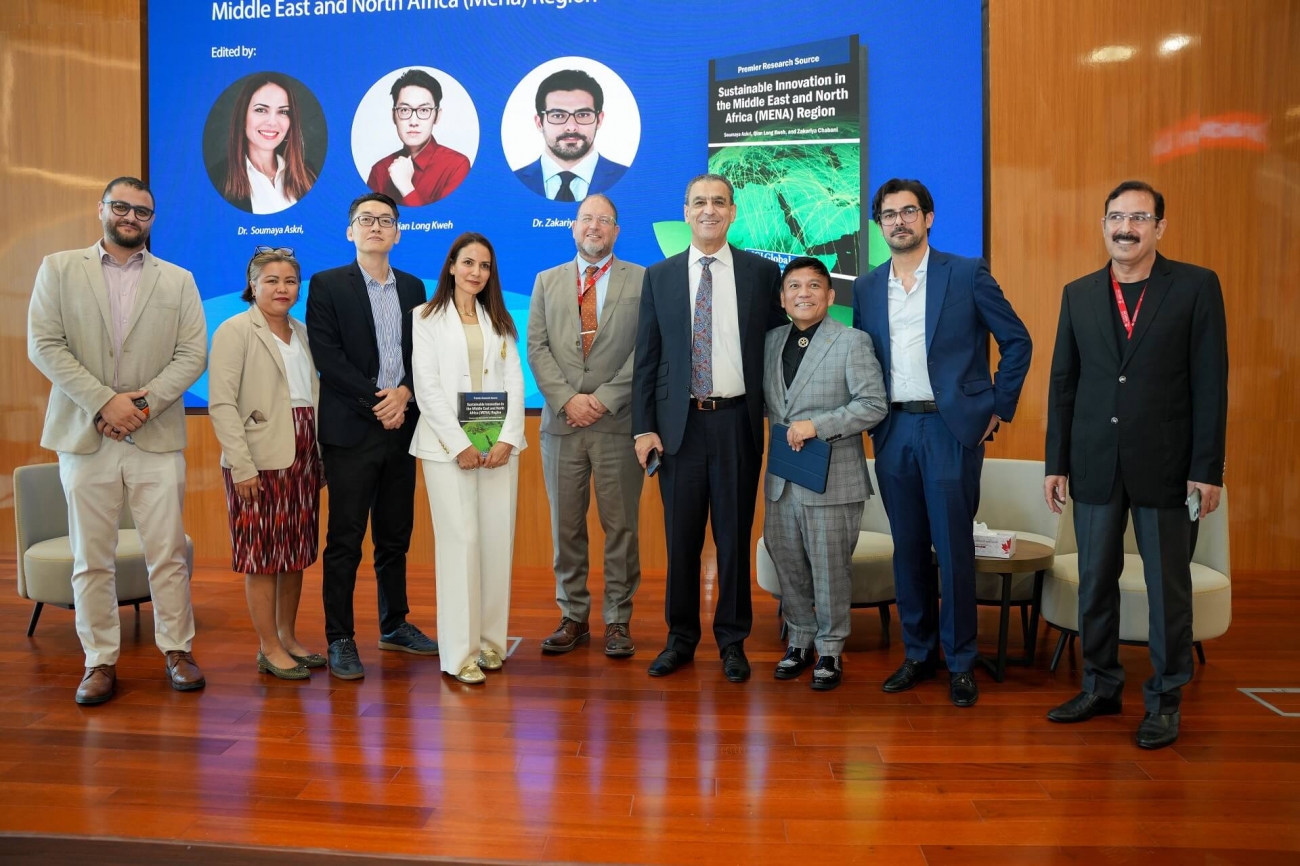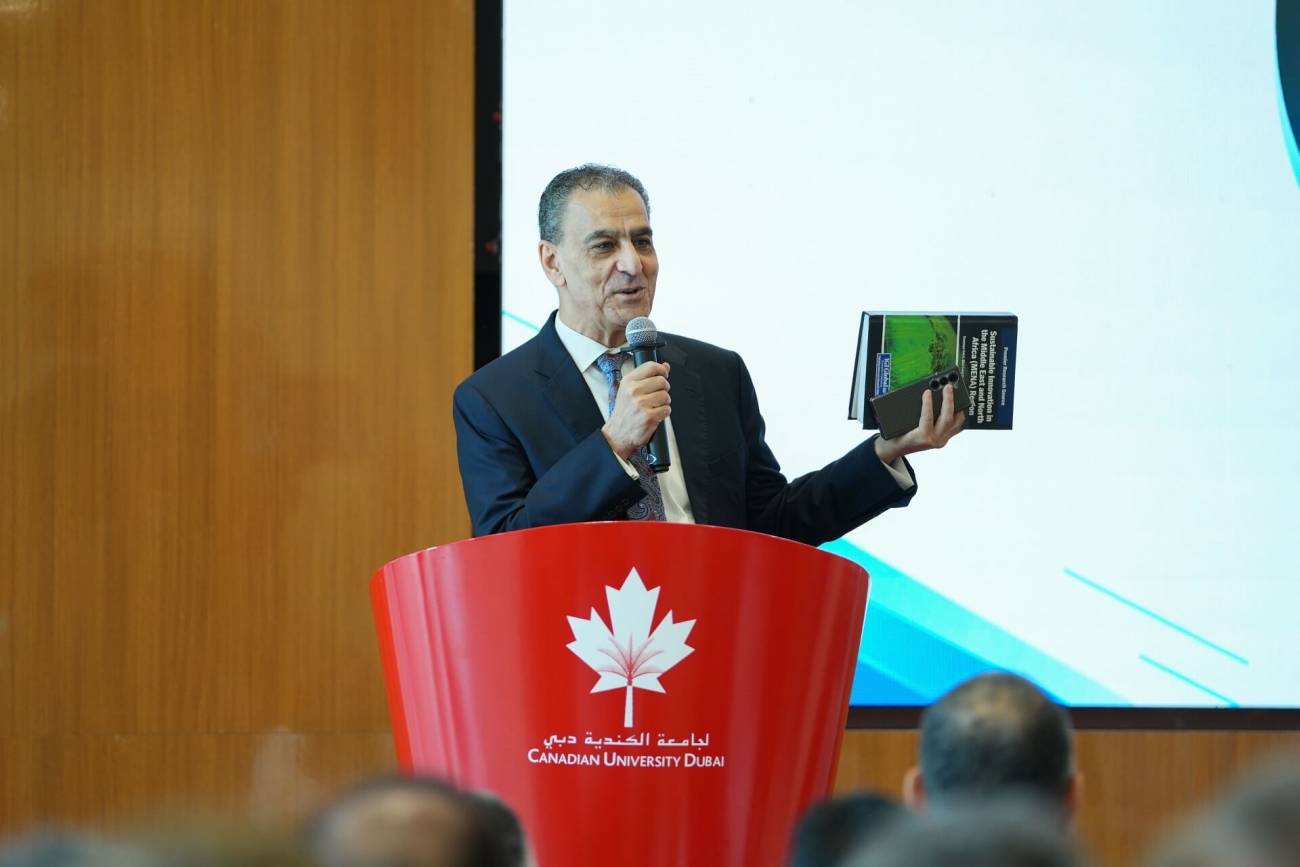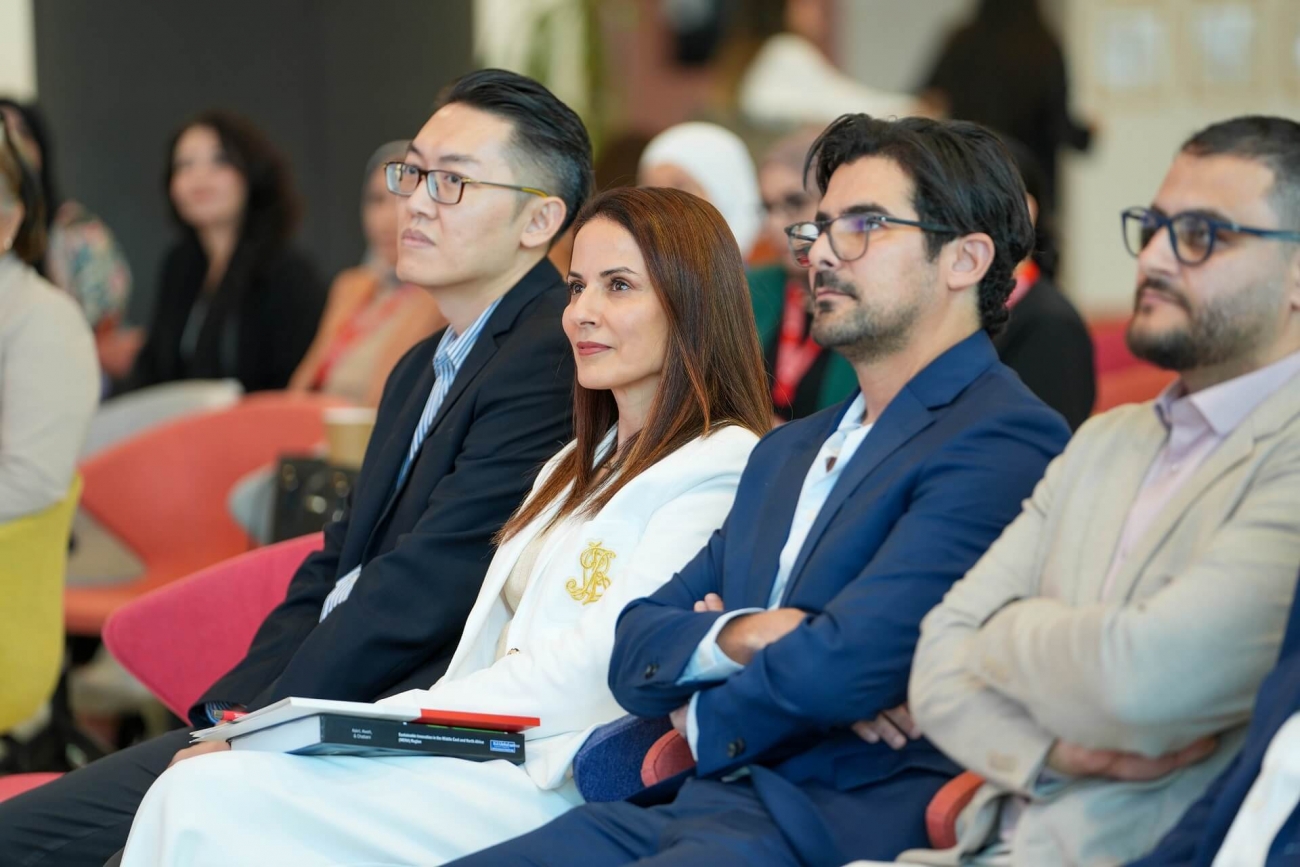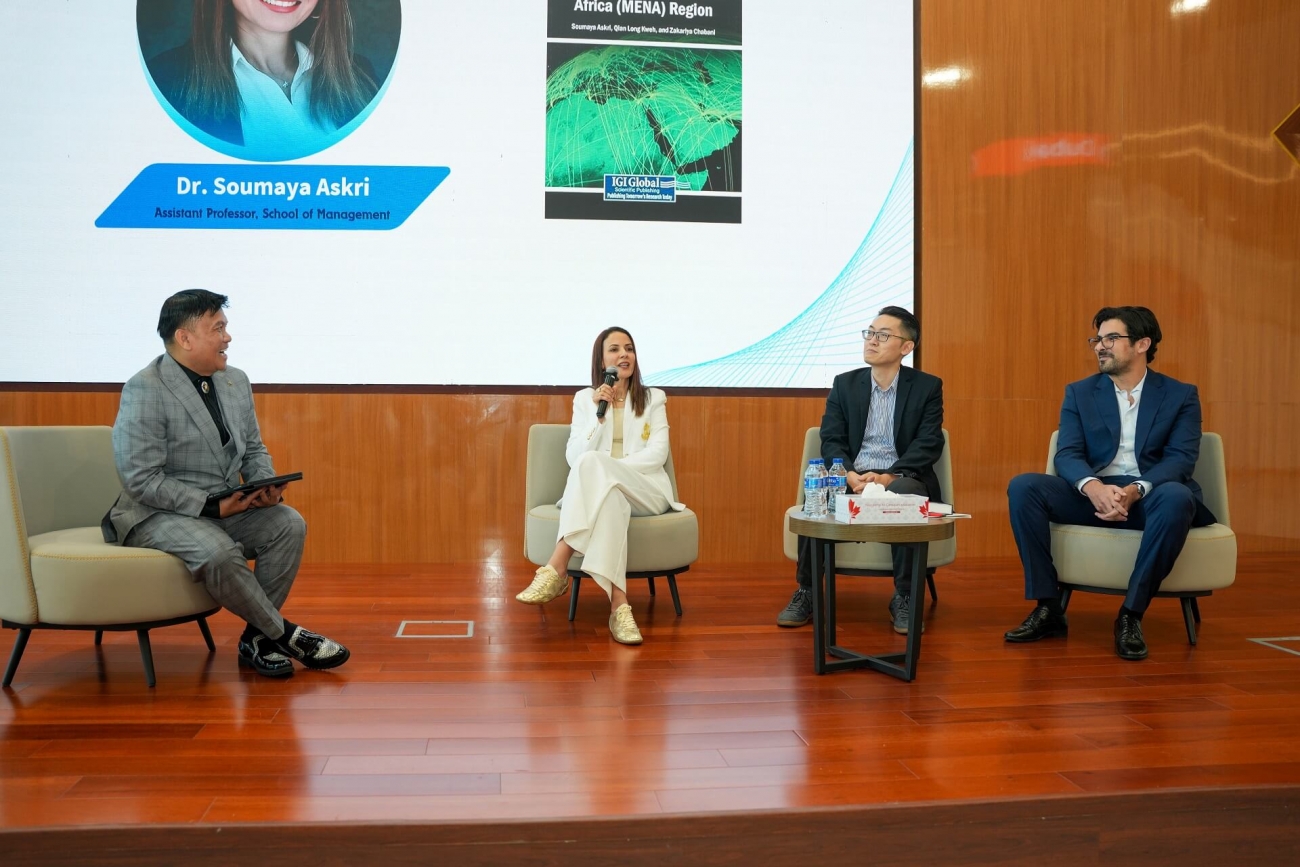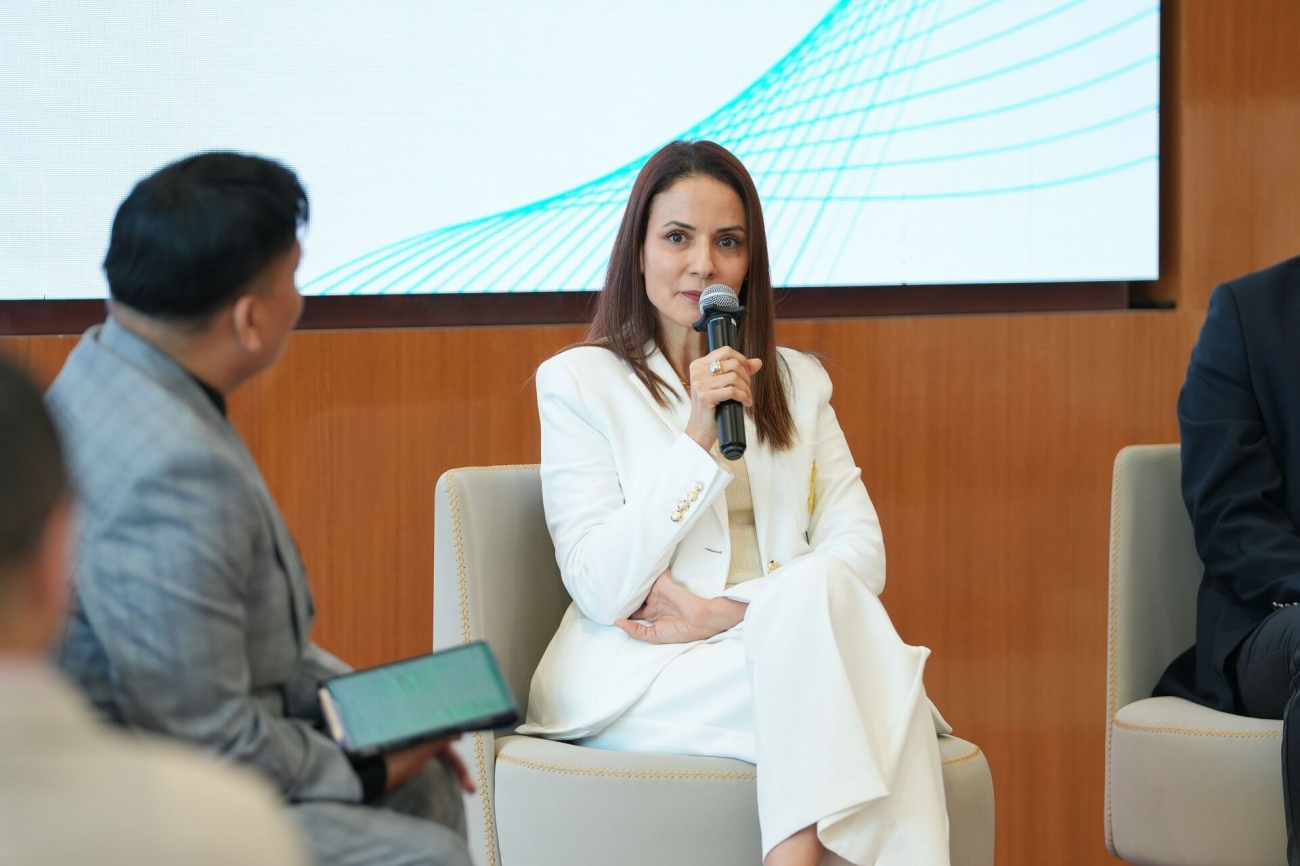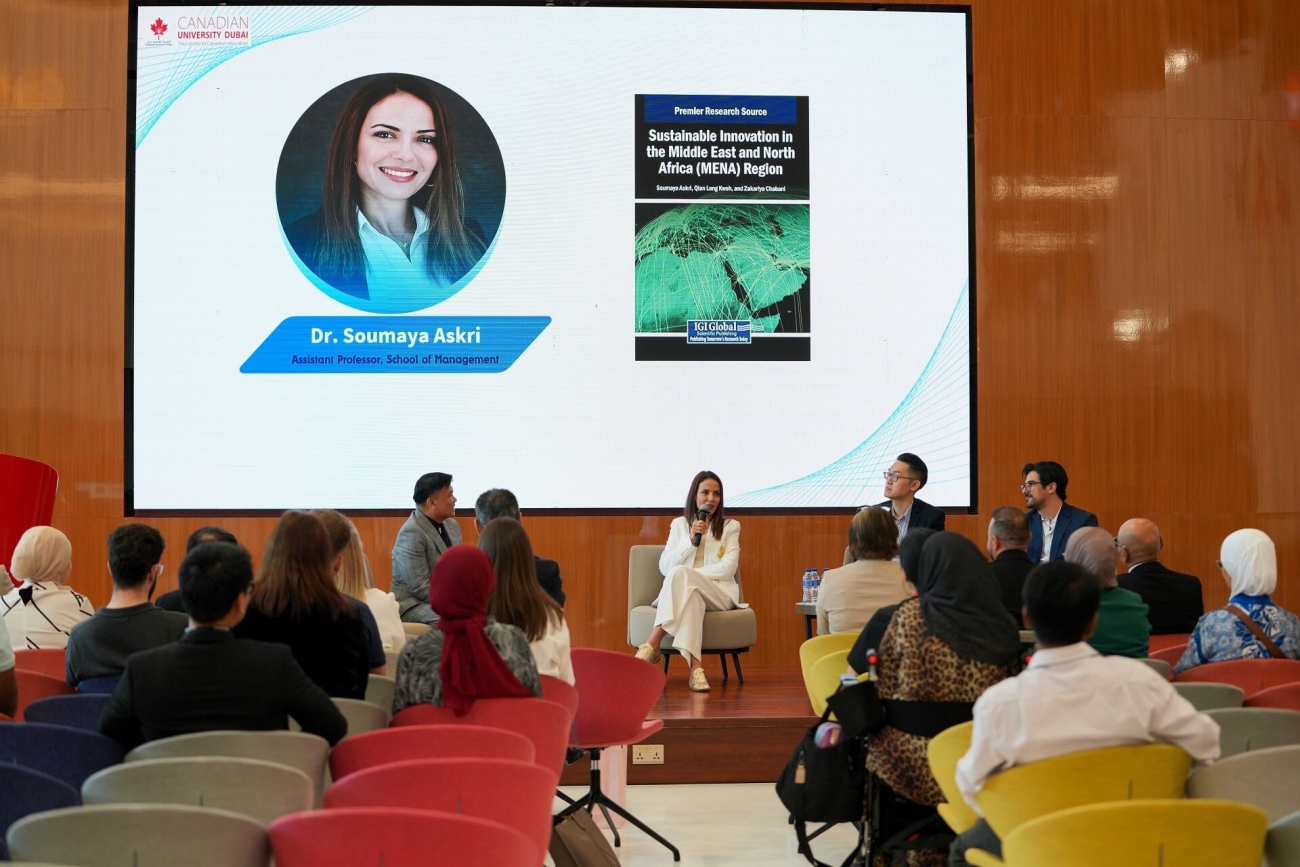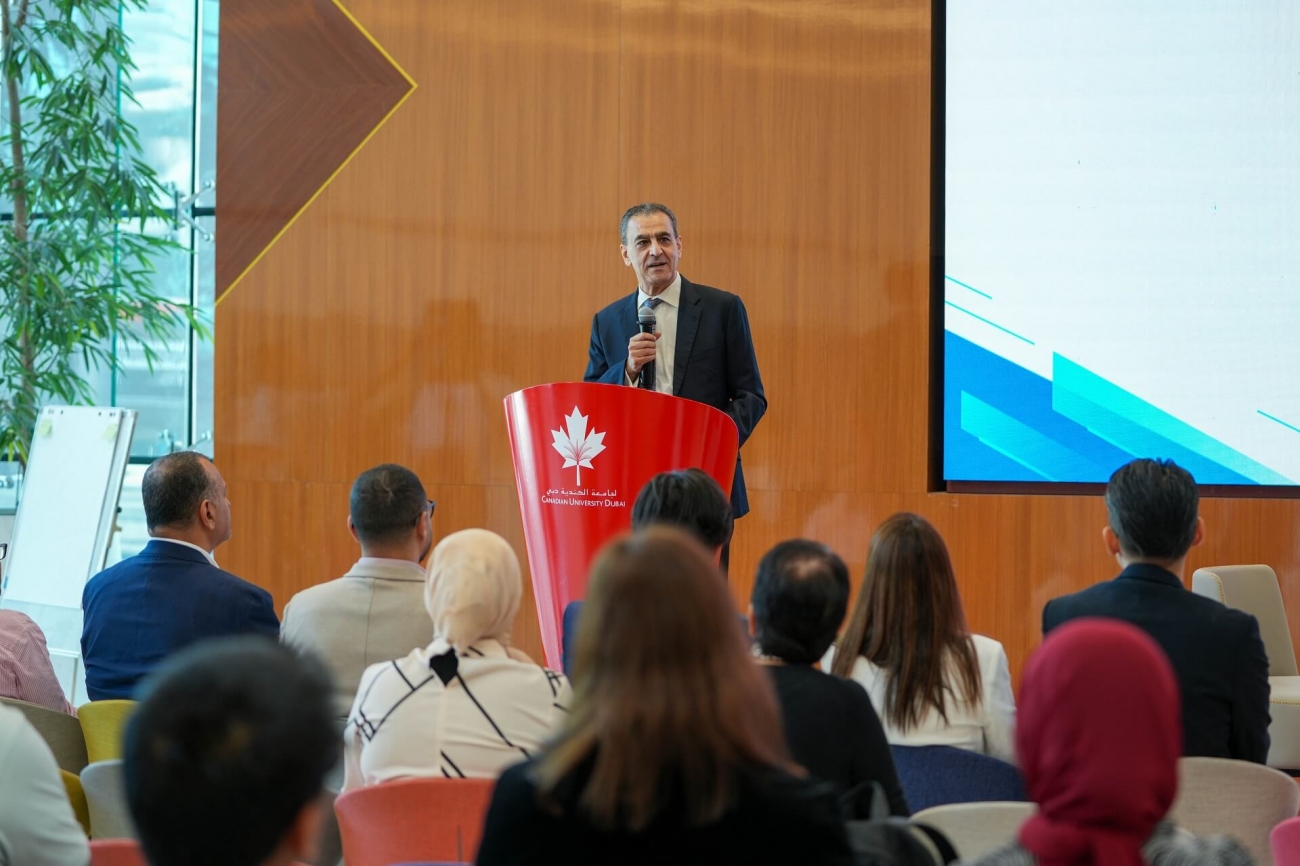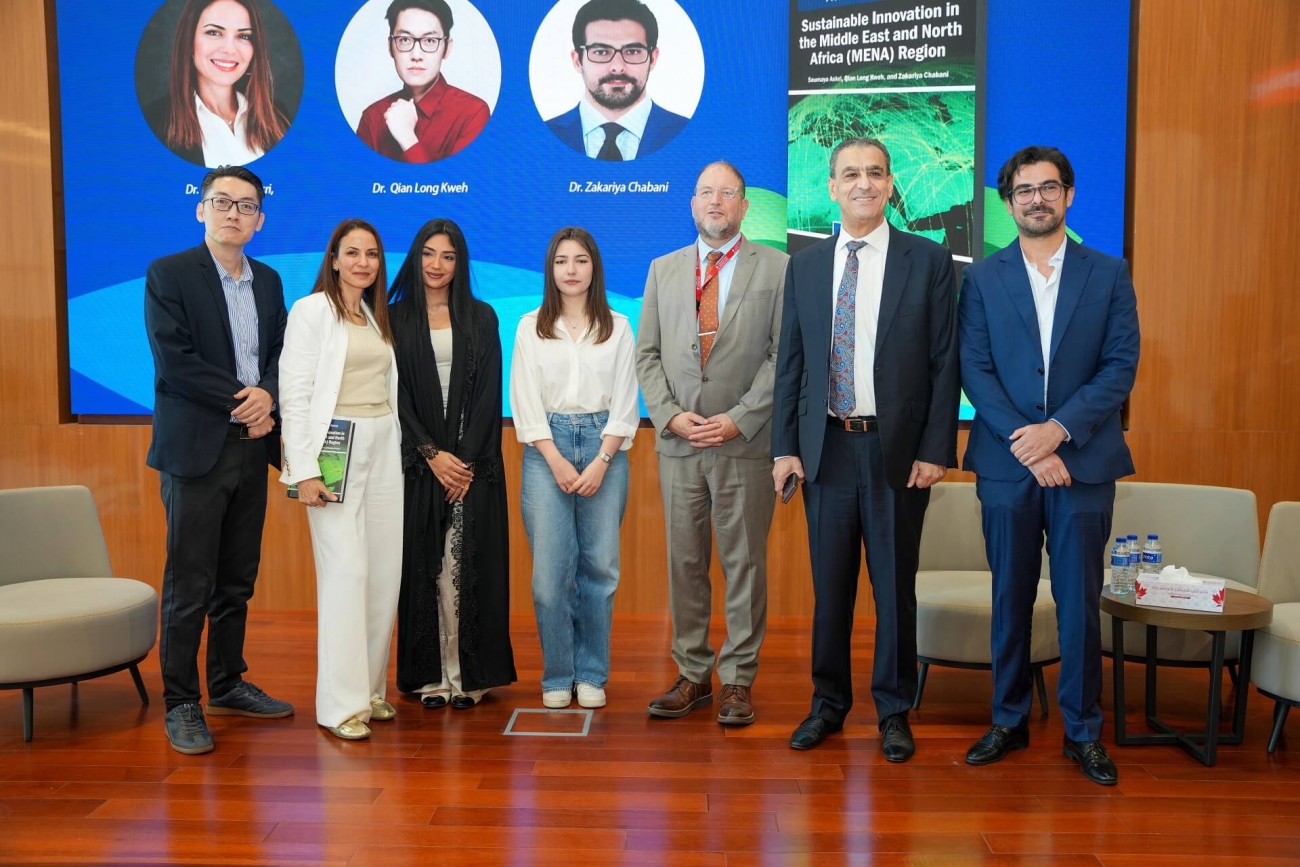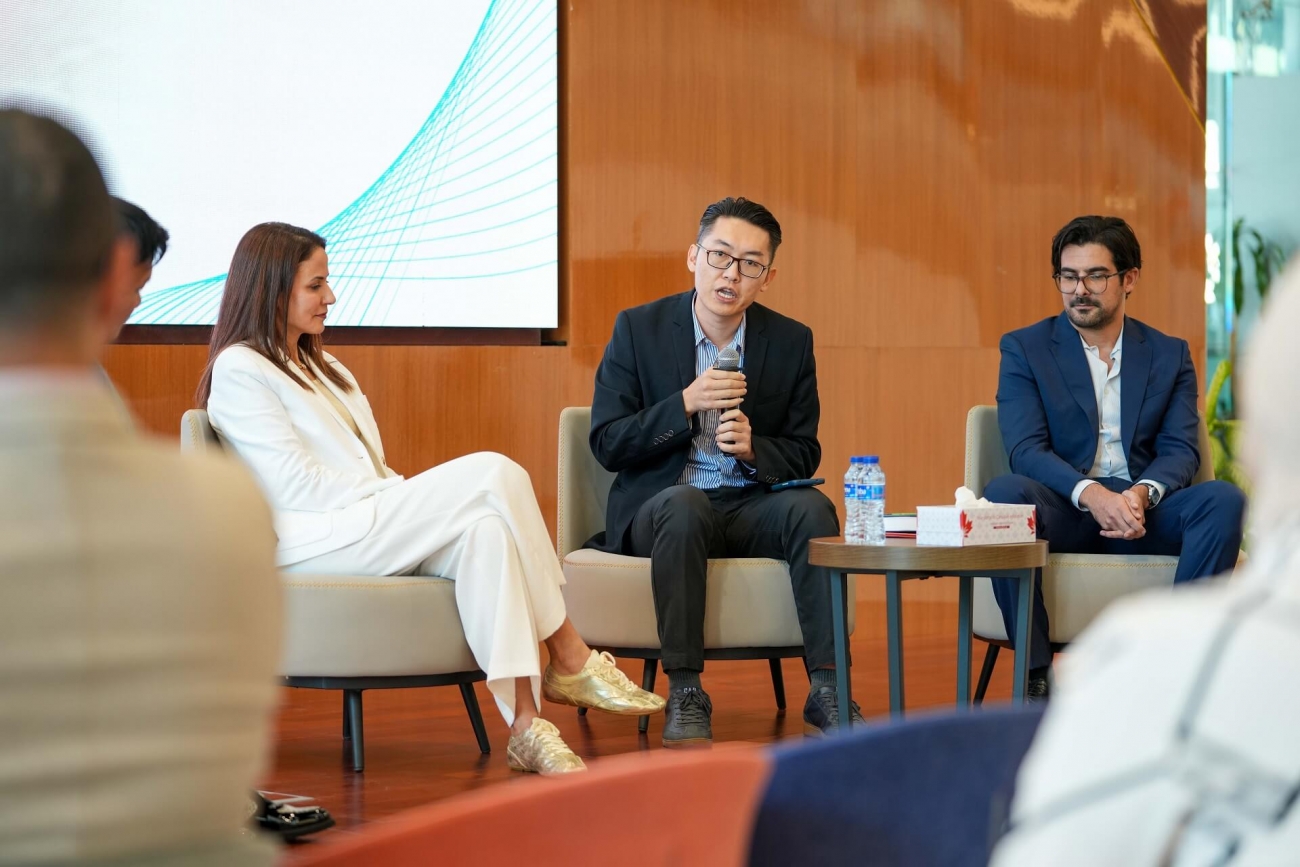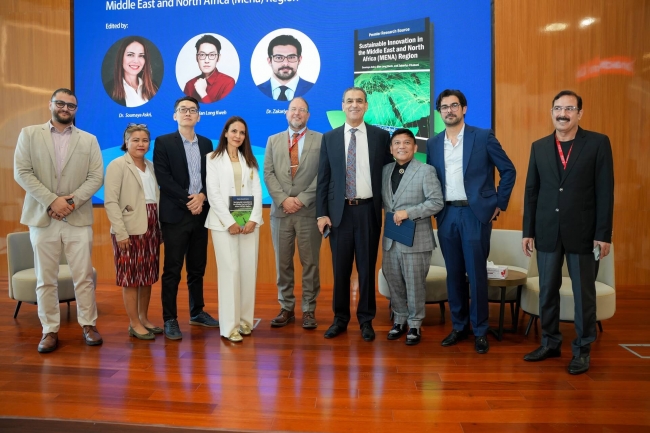
December 8, 2025, Dubai, United Arab Emirates (UAE): In a region defined by both ancient wisdom and rapidly evolving landscapes, the question of how the Middle East and North Africa can transform its challenges into opportunities has never felt more urgent. This question became the seed of inspiration for Sustainable Innovation in the MENA Region, a new scholarly volume co-edited by Dr. Soumaya Askri, Assistant Professor at the School of Management at Canadian University Dubai, alongside esteemed colleagues from across the region.
As Dr. Soumaya describes, the book emerged from a collective responsibility felt by its editors, not only as academics, but as educators working directly with the next generation of thinkers and innovators. “Our region stands at a crossroads,” she reflects. “We are rich in history, culture, and resources, yet confronted by pressing environmental and economic realities. We wanted to highlight the creativity, resilience, and leadership already taking shape across the MENA region, and to show how sustainable innovation can shape a more inclusive and hopeful future.”
A Vision Beyond Theory
More than a traditional academic text, the book is intended as a call to action. It illustrates how sustainability and innovation, or Sustainovation, as the editors term it, together hold the power to redefine the region’s trajectory. Through case studies ranging from blockchain-enabled supply chains and AI-driven solutions, to solar megaprojects, smart waste management systems, and circular design in everyday products, the book presents a panoramic view of the new possibilities emerging from the MENA landscape.
“Sustainable innovation is not a luxury,” Dr. Soumaya emphasizes. “It is essential to building economies that thrive while preserving the planet for future generations.”
Stories of Leadership and Ingenuity
Among the many examples explored, several continue to stand out for Dr. Soumaya. She cites Morocco’s Noor Solar Complex as a monumental testament to vision and commitment in renewable energy, and the UAE’s leadership in deploying digital technologies such as blockchain to enhance transparency and equity across supply chains.
But she is equally moved by innovations emerging from smaller-scale or unexpected corners of the region. AI- and blockchain-powered carbon-neutral tourism initiatives in Morocco and Tunisia, smart waste management systems across UAE cities, and corporate practices that turn food waste, marble remnants, and everyday materials into sustainable alternatives all reflect a deeper cultural shift. “These stories remind us that sustainable innovation is not restricted to massive infrastructure projects,” she notes. “It can arise from everyday products and industries, transforming the way we live and consume.”
Together, these examples illustrate a powerful truth: the MENA region is not simply adapting to global sustainability trends, it is shaping them.
A Region Defined by Resilience
When asked what makes innovation in the MENA region unique, Dr. Soumaya speaks of the deep connection between creativity and resilience. “Here, innovation is often a matter of survival and adaptation,” she says. “We face challenges such as water scarcity, climate pressures, and growing energy demands. These realities push us to create solutions that are not only practical, but profoundly human, solutions that weave together the wisdom of our traditions with the capabilities of modern technologies.”
This spirit of resilience, she believes, is what positions the MENA region as a powerful contributor to global sustainability dialogues.
Challenges as Catalysts for Change
Throughout the process of researching and editing the book, Dr. Soumaya encountered the complexities of sustainability across the region. The primary challenge, she notes, is not vision, the region is abundant in bold strategies, but execution. “Policies must translate into real action. Financing must match ambition. Implementation must be consistent across borders and sectors.”
Equity is another critical dimension. “Sustainability must uplift entire communities,” she explains. “It cannot be a privilege for a few.”
Yet she does not see these challenges as barriers. Instead, she views them as catalysts for innovation. “Time and again, the region has shown the ability to turn constraints into creativity,” she says. “These pressures give rise to uniquely adaptive forms of sustainable innovation that inspire beyond our borders.”
A Mirror and a Map for the Future
Dr. Soumaya hopes the book serves multiple audiences across the region. For policymakers, it provides evidence to guide visionary strategy. For business leaders, it demonstrates how profitability can align with purpose. For academics and researchers, it opens new avenues for collaboration.
“We designed this book to be both a mirror reflecting our progress, and a map guiding future action,” she explains.
And for students, especially those at CUD, the message is especially resonant. “You are the architects of tomorrow,” she says with conviction. “Sustainability is an invitation to innovate boldly, lead ethically, and serve humanity. This work reflects CUD’s spirit of inspiring minds and transforming lives.”
A Collaborative Achievement
Bringing together scholars from diverse fields and backgrounds was, she admits, both challenging and deeply rewarding. “Collaboration was the heartbeat of the project. The richness of perspectives gave the book its authenticity. In many ways, the process itself mirrored the values of sustainability — built on respect, inclusivity, and dialogue.”
Looking Ahead: The Promise of ‘Sustaientovation’
As she looks toward the future, Dr. Soumaya is most excited by what she describes as Sustaientovation, the fusion of sustainability, entrepreneurship, and innovation. This integrated framework encourages researchers, students, governments, and industries to move beyond short-term fixes toward long-term, scalable solutions powered by advanced technologies like AI and renewable energy.
“It is not just a strategy,” she says. “It is a mindset, one that can shape the region’s economic, social, and environmental future in profound ways.”
An Achievement Rooted in Purpose
For Dr. Soumaya and her co-editors, the publication represents far more than an academic milestone. “It embodies our commitment to CUD’s vision and our belief that knowledge should inspire action,” she reflects. “Above all, it reminds us why we do what we do, to inspire, to innovate, and to transform lives in service of a sustainable and hopeful future.”
Gallery