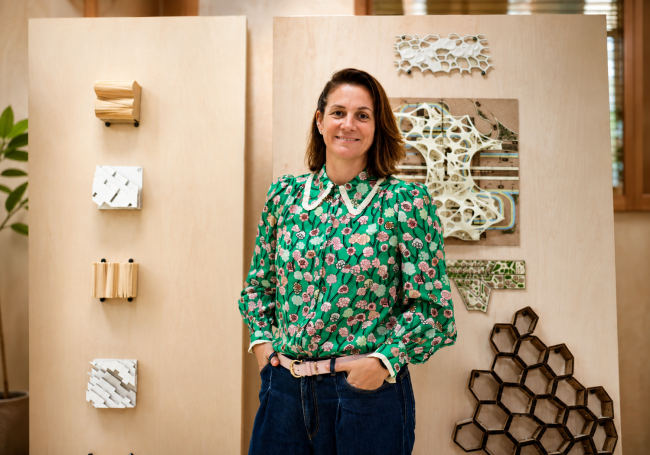
June 30, 2026, Dubai, United Arab Emirates (UAE): Dr. Sophie Johnson, Head of Department and Assistant Professor in the Faculty of Interior Design at Canadian University Dubai (CUD), has been appointed to the International Jury Board of the D’Light Lighting Design Award 2026.
The D’Light Lighting Design Award recognize excellence and innovation in lighting design worldwide. Open to designers, architects, artists, brands, manufacturers, and students, the award provides emerging and established practitioners with opportunities for international exposure, professional recognition, and engagement with a global network of lighting professionals.
The award highlights the growing importance of lighting as an integral part of contemporary spatial design rather than simply a technical requirement. Its connection with Designooor and the Universal Lighting Platform also supports knowledge exchange and professional engagement across the wider design community.
Reflecting on her appointment, Dr. Johnson said: “I see the role as both a responsibility and a valuable opportunity for professional exchange, being able to recognise and support innovative work, while learning from different approaches, perspectives, and contexts within the industry. This will also enrich my teaching and engagement with students. It represents an exciting opportunity to contribute to the wider lighting and interior design community while bringing my experience as a designer, educator, and researcher to an international platform.”
The appointment closely aligns with her teaching and research at CUD, particularly her focus on connecting design education with contemporary professional practice. Insights gained through the jury process could be brought into the studio environment, providing students with exposure to emerging approaches, technologies, current industry standards, and award-winning work in lighting design.
As a jury member, Dr. Johnson will review submitted projects, participate in discussions with fellow international jurors, and contribute to the selection of shortlisted and winning entries. The evaluation process will consider innovation and creativity, aesthetic impact, functionality and usability, sustainability and responsibility, technical excellence, and contextual fit.
Drawing on her background in interior design, design education, and research, she will consider how effectively each project responds to its context and users while integrating lighting within the wider spatial experience. Her assessment will extend beyond visual impact to consider creativity, technical resolution, sustainability, and the overall intentions of the project.
Explaining the perspective she will bring to the jury, Dr. Johnson said: “As a juror, I would therefore aim to assess projects with a balance of creative innovation, design quality, technical resolution, and meaningful impact, while recognising emerging approaches that can contribute to the future of lighting and interior design.”
The award encompasses Lighting Product Design, Art and Installation Light, AI-Assisted Lighting Design, and Lighting Project Design. Among the themes she expects to see reflected in this year’s submissions are wellbeing, sustainability, and the relationship between natural and artificial light.
She is particularly interested in how emerging technologies can be used thoughtfully to create responsive environments without compromising human experience, as well as projects that question conventional approaches and use light in creative, contextual, and meaningful ways.
For CUD’s School of Architecture and Interior Design, the appointment could further strengthen engagement with the wider design industry and international professional networks. It could also support opportunities for knowledge exchange, industry connections, and potential future collaborations that benefit faculty and students.
Dr. Johnson added: “I am most looking forward to engaging with a diverse range of projects and seeing how designers are responding to the evolving role of light within contemporary interiors and architecture. I am particularly interested in projects that demonstrate a thoughtful integration of lighting with materiality, atmosphere, wellbeing, sustainability, and user experience, rather than treating light as an isolated element.”
Explore CUD’s Bachelor of Science in Interior Design and discover how the program connects creative design education with contemporary professional practice.